Revolved Half Moon Pose, known in Sanskrit as Parivrtta Ardha Chandrasana, is a challenging and invigorating intermediate posture that beautifully combines the elements of balancing and twisting. This pose takes the foundational principles of Half Moon Pose and elevates them by introducing a deep spinal rotation, making it a fantastic addition to any comprehensive yoga sequence. The name itself offers insight: Parivrtta means "revolved," Ardha means "half," and Chandra means "moon," with Asana denoting "pose."
What is Revolved Half Moon Pose?
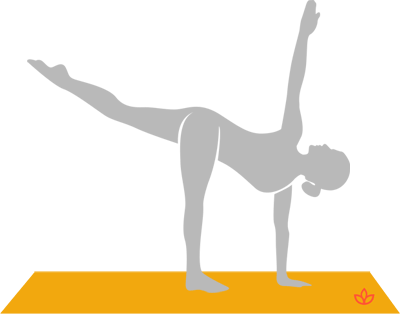
Revolved Half Moon Pose is a dynamic standing balance and twist that strengthens the legs and core while stretching the hamstrings, shoulders, and obliques. Unlike the open twist of Ardha Chandrasana, Parivrtta Ardha Chandrasana involves twisting the torso towards the standing leg, requiring greater stability and body awareness. It's a powerful pose for cultivating mental focus and physical equilibrium, often found in advanced Vinyasa flows or as a peak pose in a sequence designed by a creative yoga generator.
How to Practice Revolved Half Moon Pose (Parivrtta Ardha Chandrasana)
Mastering Half Moon Pose is a crucial prerequisite for safely and effectively practicing Revolved Half Moon. Approach this pose with mindfulness and listen to your body.
Instructions:
- Begin in Half Moon Pose with your right foot on the floor and your right fingertips on the mat, just in front of or slightly to the right of your right foot. Your left leg should be extended parallel to the floor, and your left arm reaching towards the sky, torso open to the left.
- As you exhale, slowly lower your left fingertips towards the floor, placing them either directly under your left shoulder or slightly to the inside of your right foot.
- Inhale deeply and begin to revolve your torso to the right, towards your standing leg. Simultaneously, extend your right arm straight towards the sky, stacking your shoulders as much as possible.
- Engage your core, particularly your abdominal muscles, to deepen the twist and help maintain balance. Keep your floating left leg strong and active, pressing through the heel.
- Hold the pose for several breaths, maintaining steady breathing and a focused gaze (Drishti) to the side or down, as comfortable for your neck.
- To release, exhale and untwist your torso, returning to your starting Half Moon Pose.
- Inhale and slowly rise back to standing.
- Repeat the sequence on the left side, standing on your left foot and revolving your torso to the left, extending your left arm towards the sky.
If you're looking for variations or specific preparatory poses, a reliable pose generator can offer tailored suggestions based on your current practice level.
Benefits of Revolved Half Moon Pose
Revolved Half Moon Pose offers a multitude of benefits, both physical and energetic:
- Improves Balance and Coordination: The one-legged balance challenges your proprioception and strengthens the stabilizing muscles around your ankles, knees, and hips.
- Strengthens Legs and Core: The standing leg and active floating leg build immense strength in the quadriceps, hamstrings, glutes, and inner thighs. The deep engagement of the core muscles is essential for maintaining the twist and balance.
- Stretches Shoulders, Back, and Hamstrings: The twisting action and extended arm create a comprehensive stretch through the spine, shoulders, and the back of the standing leg.
- Enhances Digestion: Twisting poses are believed to stimulate the abdominal organs, aiding in detoxification and improving digestive function.
- Boosts Mental Focus: The challenging nature of the pose demands concentration, helping to quiet the mind and build mental resilience.
Cautions and Contraindications
While beneficial, Revolved Half Moon Pose is an advanced posture and should be approached with caution, especially if you have certain conditions.
- Avoid practicing this pose if you have not yet mastered Half Moon Pose, as a strong foundation is essential.
- Individuals with neck pain or injury should modify their gaze. Instead of looking up, maintain a downward gaze towards the floor to keep the neck in a neutral and safe position.
- Those with recent or chronic hip, knee, or ankle injuries should avoid this pose or practice with extreme care and guidance from a qualified instructor.
- If you experience low back pain, proceed with caution and only twist as far as comfortable, keeping the spine long.
- Pregnant individuals should avoid deep twisting poses.
Revolved Half Moon Pose Details
Here’s a quick reference for this powerful pose:
| Detail | Description |
|---|---|
| Sanskrit Name | Parivrtta Ardha Chandrasana |
| Pronunciation | pah-ree-VRIT-tah ARD-hah chahn-DRAH-sah-nah |
| Pose Level | Intermediate |
| Drishti (Gaze) | Parshva (Side) or down towards the floor if preferred due to neck sensitivity. |
| Pose Type | Balancing, Standing Pose, Twist |
| Related Poses | Revolved Triangle Pose, Revolved Side Angle Pose |
Exploring poses like Revolved Half Moon through a dedicated yoga generator can help practitioners visualize and understand the intricacies of such complex postures, enhancing their learning experience.