Revolved Triangle Pose (Parivrtta Trikonasana)
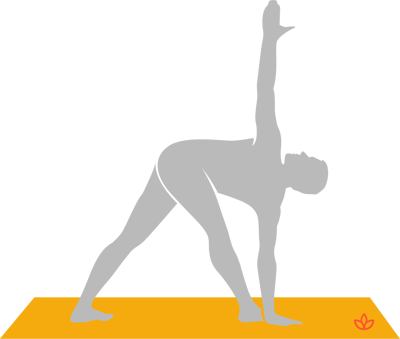
The Revolved Triangle Pose, known in Sanskrit as *Parivrtta Trikonasana* (pronounced par-vrit-tah tree-ko-NAH-sah-nah), is a dynamic standing yoga posture that beautifully combines balance, flexibility, and a deep spinal twist. The name translates to "Revolved Three-Angled Pose," reflecting the triangular shape formed by your legs and the revolving action of your torso. This intermediate-level asana is a staple in many yoga practices, offering a potent blend of strength and openness.
How to Practice Revolved Triangle Pose
Follow these steps to safely enter and experience Revolved Triangle Pose. Remember to move with your breath and listen to your body.
- Begin in Mountain Pose (Tadasana) at the top of your mat.
- Exhale and step your left foot back about 3 to 4 feet, positioning your feet as if you were setting up for a Warrior I stance, but with slightly less distance. Your front heel should align with the arch of your back foot.
- Angle your left toes slightly inward, about 45-60 degrees, and keep your right foot pointing directly forward. Ensure both heels are firmly grounded.
- Inhale, lengthening your spine, and reach your left arm towards the sky.
- As you exhale, hinge from your right hip, keeping your right leg straight (with a micro-bend in the knee if hyperextension is an issue) and your torso parallel to the floor.
- Begin to twist your torso to the right, placing your left hand on the floor, a block, or your shin to the outside of your right foot.
- Inhale and extend your right arm straight up towards the sky, aligning it vertically with your left arm. Your gaze, or *drishti*, should be directed towards your right fingertips (Urdhva).
- Actively press down through both feet to maintain a strong foundation. Keep lifting through your crown and extending through your spine, rotating your chest further towards the ceiling with each exhale.
- Hold the pose for several breaths, focusing on the expansion through your chest and the stability in your legs.
- To release, exhale, and slowly unwind your torso, coming back to a forward bend. Inhale as you rise back to standing.
- Repeat on the other side.
Benefits of Revolved Triangle Pose
Parivrtta Trikonasana offers a multitude of benefits, targeting various systems of the body:
- Increases Spinal Flexibility: The deep rotation in the spine helps to lubricate the vertebral discs and enhance the range of motion, improving overall spinal health.
- Tones the Legs and Core: Maintaining stability in this balancing twist significantly strengthens the quadriceps, hamstrings, and core abdominal muscles.
- Relieves Back Pain: By creating space between the vertebrae and stretching the muscles surrounding the spine, this pose can help alleviate lower back stiffness and pain.
- Stimulates Digestion: Abdominal compression and twisting actions massage the internal organs, which can aid in detoxification and stimulate healthy digestion.
- Challenges Balance and Coordination: The intricate balance required strengthens proprioception and improves overall body awareness and coordination. This pose is an excellent addition to any yoga flow designed by a pose generator focused on stability.
- Energizes and Invigorates: The combination of a forward bend and a twist can be incredibly uplifting, clearing mental fatigue and promoting a sense of alertness.
Cautions and Contraindications
While highly beneficial, Revolved Triangle Pose is an intense twist and should be approached with care:
- Avoid this pose if you have a recent or chronic back injury, especially in the lumbar spine.
- Individuals with high or low blood pressure should either avoid this pose or practice it with extreme caution and modifications.
- If you experience headaches, migraines, or insomnia, practice with a modified head position (gazing forward or down) or avoid the pose entirely.
- Pregnant individuals should avoid deep twisting poses that compress the abdomen. Consider alternative twists like Revolved Crescent Lunge with an open twist.
- Listen to your body. Do not force the twist. It’s better to maintain a longer, less intense twist than to compromise your form or strain your spine.
Revolved Triangle Pose Details
Here's a quick overview of Revolved Triangle Pose for your reference, perfect for finding new poses in a yoga generator.
| Detail | Description |
|---|---|
| Sanskrit Name | Parivrtta Trikonasana |
| Pronunciation | par-vrit-tah tree-ko-NAH-sah-nah |
| Pose Level | Intermediate |
| Drishti (Gaze) | Urdhva (Towards the sky) |
| Pose Type | Balancing, Forward Bends, Standing Poses, Twists |