Astavakrasana (Eight-Angle Pose)
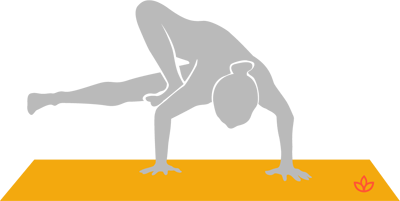
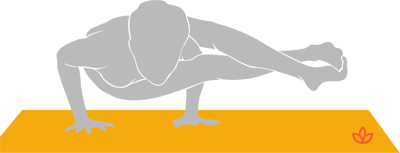
Astavakrasana, or Eight-Angle Pose, is a challenging and dynamic arm balance that demands strength, focus, and a keen sense of internal alignment. Named after the sage Astavakra, who was born with eight deformities and yet became a revered spiritual teacher, this pose embodies transformation and the finding of balance despite apparent irregularities. It is an asymmetrical posture where the body is supported entirely by the hands, with the legs extended to one side, creating a powerful twist and deep core engagement.
How to Practice Astavakrasana (Eight-Angle Pose)
Getting Started
Begin by sitting on your mat with your legs extended in Staff Pose (Dandasana).
Step-by-Step Instructions
- From Staff Pose, exhale and bend your right knee, lifting your foot towards your torso.
- Place your right palm firmly on the mat near your right hip, fingers pointing forward or slightly out to the side. Ensure your hand is flat, distributing weight evenly through all knuckles.
- Drape your right knee over your upper right arm, as high as possible, aiming for the knee to rest securely above the elbow. This creates a strong shelf for your leg.
- Place your left palm directly outside your left thigh, aligning it with your right hand so your hands are roughly shoulder-distance apart.
- Lift your left foot and hook your left ankle under your right foot. Flex both feet strongly to engage the legs.
- Inhale, lean forward, and press into your hands to lift your hips and legs off the floor. Engage your core deeply.
- Exhale as you begin to bend your elbows, lowering your chest and head slightly, similar to Low Plank Pose (Chaturanga Dandasana).
- Simultaneously, straighten both legs out to the right side, parallel to the floor, actively squeezing them together and keeping your feet flexed. Your gaze (Drishti) should be towards the tip of your nose (Nasagre).
- Hold the pose for a few breaths, maintaining core engagement and steady balance.
- To release, inhale and gently straighten your arms, then exhale as you lower your hips and legs back to the floor.
- Repeat on the other side. You can use a yoga generator or pose generator to visualize this pose from different angles.
Benefits of Eight-Angle Pose
Astavakrasana is a holistic posture that offers numerous physical and mental benefits:
- Strengthens Arms, Shoulders, and Wrists: Bearing the entire body weight, this pose dramatically builds strength in the upper body, forearms, and wrists.
- Tones Abdominal Muscles: The deep twist and lift required to balance intensely engages and tones the entire core musculature, including the obliques.
- Improves Digestion: The abdominal compression and internal massage can stimulate digestive organs, aiding in detoxification and improving metabolic function.
- Enhances Balance and Focus: As an asymmetrical arm balance, Astavakrasana demands acute concentration and refined bodily awareness, significantly improving mental and physical balance.
- Boosts Confidence: Mastering such a challenging pose cultivates a sense of accomplishment and self-efficacy, extending beyond the mat.
Cautions and Contraindications
As an advanced arm balance, Astavakrasana should be approached with caution. Avoid this pose if you have:
- Recent or chronic wrist injuries.
- Shoulder injuries or rotator cuff problems.
- Elbow pain or instability.
- Pregnancy.
- High blood pressure.
It is always advisable to practice under the guidance of a qualified yoga instructor when attempting advanced postures. For those interested in exploring similar arm balances, consider preparatory poses like Side Crow Pose.
Eight-Angle Pose Details
| Sanskrit Name: | Astavakrasana |
| Pronunciation: | ah-STAH-vah-KRAH-sah-nah |
| Pathways to Practice: | Advanced |
| Drishti (Gaze Point): | Nasagre (Tip of the nose) |
| Pose Category: | Arm Balances, Balancing, Core, Twists |