Vasiṣṭhāsana, or Side Plank Pose, is a powerful yoga posture that combines balance, strength, and focus. Named after the revered Vedic sage Vasiṣṭha, who is often associated with wisdom, dignity, and power, this pose embodies the qualities of its namesake. It challenges the practitioner to find stability while simultaneously opening the body and cultivating inner equilibrium. Whether you're looking to enhance your core strength, refine your balance, or simply explore a new dimension in your practice, Vasiṣṭhāsana offers a rewarding experience.
If you're using a yoga generator or a pose generator for your practice, you'll often find Side Plank Pose included in sequences designed to build upper body and core strength.
How to Practice Vasiṣṭhāsana (Side Plank Pose)
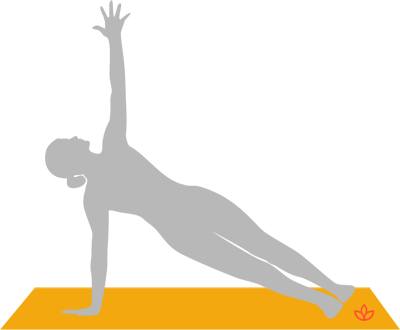
Practicing Vasiṣṭhāsana requires mindful alignment and core engagement. Follow these steps to move into the pose safely and effectively:
Instructions:
- Begin in Plank Pose, ensuring your hands are directly under your shoulders and your body forms a straight line from head to heels. Your gaze (drishti) should be forward.
- Exhale and gradually shift your body weight to your right hand and the outer edge of your right foot. You can slightly rotate your right foot heel inward for more stability.
- As you shift, stack your left foot directly on top of your right foot. If this feels too challenging, you can place your left foot in front of your right foot on the mat for increased stability.
- Inhale deeply and extend your left arm straight up towards the sky, rotating your chest open. Your gaze can follow your left hand (Parshva Drishti), or remain focused forward.
- Actively engage your core muscles, lifting your hips away from the floor to maintain a straight line from your head to your heels. Avoid letting your hips sag or hike up too high.
- Keep your shoulders stacked, ensuring your top shoulder is directly above your bottom shoulder. Your supporting arm should be strong, with a slight micro-bend in the elbow to protect the joint.
- Breathe deeply and evenly while holding the pose, maintaining your balance and alignment.
- To release, exhale and gently lower your left hand and return to Plank Pose. Repeat on the other side.
Cautions and Contraindications:
- Avoid this pose if you have a wrist injury or carpal tunnel syndrome.
- Individuals with shoulder injuries should approach this pose with caution or opt for a modified version, such as placing the forearm down (Dolphin Plank Pose variation).
- Those with high blood pressure should avoid holding the breath and maintain a steady, calm breath.
Benefits of Vasiṣṭhāsana (Side Plank Pose)
Vasiṣṭhāsana offers a multitude of physical and energetic benefits:
- Improves Balance and Stability: As a unilateral arm balance, it profoundly enhances your sense of balance and proprioception.
- Strengthens Arms and Shoulders: This pose builds significant strength in the wrists, forearms, biceps, and deltoids.
- Engages and Strengthens the Core: Vasiṣṭhāsana is an excellent pose for strengthening the obliques, transversus abdominis, and other deep core muscles.
- Opens the Chest and Shoulders: By extending the top arm upwards and rotating the torso, the pose helps to open the chest and stretch the shoulders, counteracting slouching.
- Boosts Focus and Concentration: Holding this demanding pose requires intense mental focus, thus improving concentration.
- Energizes the Body: The invigorating nature of Vasiṣṭhāsana can help to stimulate energy and reduce fatigue.
- Activates Chakras: Energetically, it is said to open the Anahata (heart chakra), fostering compassion and connection, and the Manipura (solar plexus chakra), enhancing personal power and confidence.
Pose Details
| Sanskrit Name: | Vasiṣṭhāsana |
| Pronunciation: | vah-seesh-TAH-sah-nah |
| English Name: | Side Plank Pose |
| Pose Level: | Intermediate |
| Drishti (Gaze): | Parshva (Side) or forward |
| Pose Type: | Arm Balance, Balancing, Core, Strength |